

The neighborhood within the neighborhood
By Julia Biss
Berlin, August 2025 - A new chapter for a Neukölln icon: the disused former Quelle department store on Karl-Marx-Straße in Berlin is currently undergoing a comprehensive conversion and redesign under the direction of the Manifesto Group - the team behind the Manifesto Market in Prague and Berlin, the Himitsu Japanese Speakeasy and the Soot Bar. The golden years of the department store, characterized by the consumer culture of the post-war period, provide the starting point for a design that combines retro elements with a contemporary sensibility. With vintage furniture from the Czech Republic and Germany, mid-century details and culturally diverse spatial planning, Kalle Halle honors the building's heritage while creating a dynamic new cultural anchor for Neukölln - a growing, vibrant Berlin neighborhood.
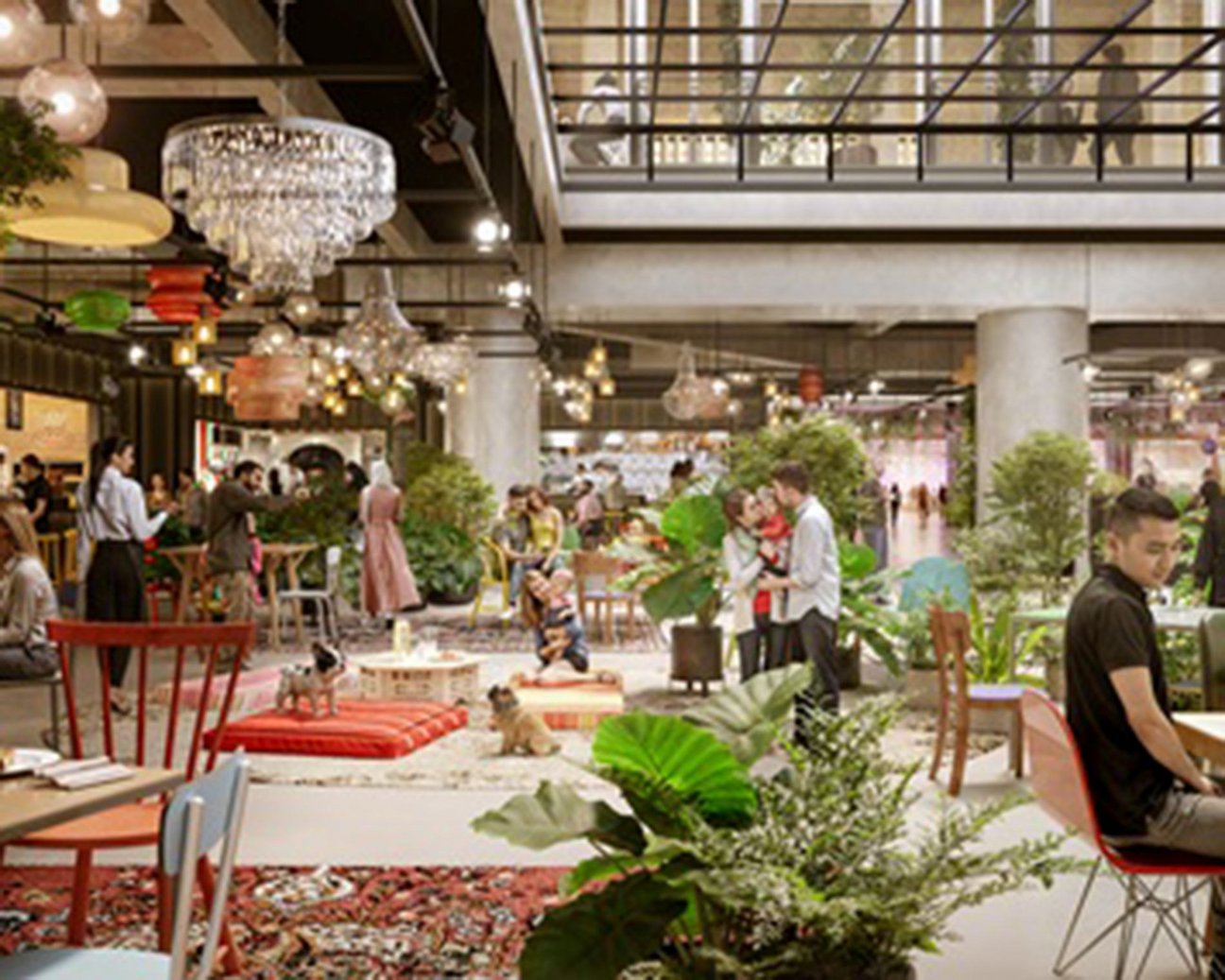
The concept was developed in collaboration with Chybik+Kristof under the creative direction of Sara Gomes - Lead Architect and Team Lead at Martin Barry's Hospitality group. Gomes, known for her award-winning design of the Manifesto Market as well as the Himitsu Japanese Speakeasy and Soot Bar at Potsdamer Platz in Berlin, also worked closely with Chybik+Kristof on the design of the Manifesto Market in Prague. At Kalle Halle, she led the transformation of the 2,300m² former department store into a multi-faceted, retro-inspired spatial food market experience. Building on the principles of urban design and neighborhood planning, the team translated elements of urban design into the interior: narrow alleys, open squares and a central, lushly greened inner park create the feeling of a walkable neighborhood - a place to discover and linger. Each zone tells its own story and invites both spontaneous encounters and deliberate stays - a microcosm of urban life under one roof.
"It was important for us to create a place that stays true to our roots - as an urban intervention, as a center for community and as something contemporary that still feels natural and inviting. This massive concrete structure could easily have come across as cold and forbidding to visitors, so we had to balance the weight and beauty of the concrete structure with light-filled atriums, carpets and period furniture," explains Martin Barry.
Materiality and history in dialog
Raw, retro, cozy: the design language of the Kalle Halle is characterized by a conscious approach to the existing structure. Exposed concrete, translucent amber polycarbonate panels and untreated surfaces form a minimalist basic architecture that leaves room for targeted interventions - such as hand-painted signage by Czech graphic designer Daniel Pavelky and specially illustrated wallpaper by graphic designer Nicoleta Puiu, also part of the Manifesto Group team. These elements celebrate the wild, creative spirit of Neukölln.
In collaboration with Mexican lighting designer Kai Deidrichson from Luz en Arquitectura, with whom Martin Barry has already realized projects in Mexico, a lighting concept was developed that reinterprets the rooms depending on the time of day and use: from warm islands of light in lounge and quiet areas to clearly defined work zones for the restaurant and bar. The color scheme also reflects this approach: a restrained basic palette of neutral tones is playfully contrasted by bold accents in red and orange - a homage to the flamboyant 1970s.
Adaptive re-use: palace furniture finds a new home
The furnishings in the Kalle Halle play a special role. Instead of relying on anonymous contemporary design, the team deliberately selected mid-century and retro pieces with character and history. Primarily from the Czech Republic, supplemented by pieces from Germany, Hungary and the Netherlands, the furniture comes from iconic Czech designers such as Ludvík Volák and František Jirák as well as renowned manufacturers such as TON, Interier Praha, Tatra Pravenec, Dřevopodnik Holešov and Jitona Soběslav. Some rarities were even rescued from a castle. This furniture, often made of solid wood, leather, marble or metal, creates a cozy feeling of home. And yet they are more than nostalgic artifacts - they transport the artisanal heritage of the post-war decades into the present and build a bridge to the history of the building as a former temple of consumption for generations of Berliners.
"In a city like Berlin, where layer upon layer of history meets and constantly reinvents itself, this mix of old and new is simply perfect," says Sara Gomes. "It's our way of anchoring local memories and at the same time creating a space for contemporary encounters."
Openness and changeability as a leitmotif
Ultimately, a defining feature of the Kalle Halle is its functional and social flexibility. The architecture deliberately dispenses with rigid barriers or fixed uses and instead opens up changeable spaces that can be used in a variety of ways, from morning coffee and after-work drinks to DJ sets and art exhibitions. Temporary installations and collaborations with local artists are also part of the concept and ensure that the space and its surroundings are constantly evolving.
The Kalle Halle sees itself - both architecturally and culturally - as a platform for the neighborhood, which may also become a point of attraction for outsiders. A place where gastronomy, design and community come together in a carefully balanced equilibrium, constantly reigniting the dialog between past and present, local and international.